The Great Train Robbery
Heroes and villains, horses and trains made the Old West come alive in Coney Island.
These days, most folks associate Coney Island with the beach, the food, and (of course) the amusement rides. But at the turn of the century, many of the attractions that captured the interest of visitors were actually dramatic stage productions. Before the invention and subsequent popularity of motion pictures, historical events were recreated in spectacular theatrical presentations, made realistic by the use of large-scale panoramas and scenery, live actors, mechanical devices, and special effects.
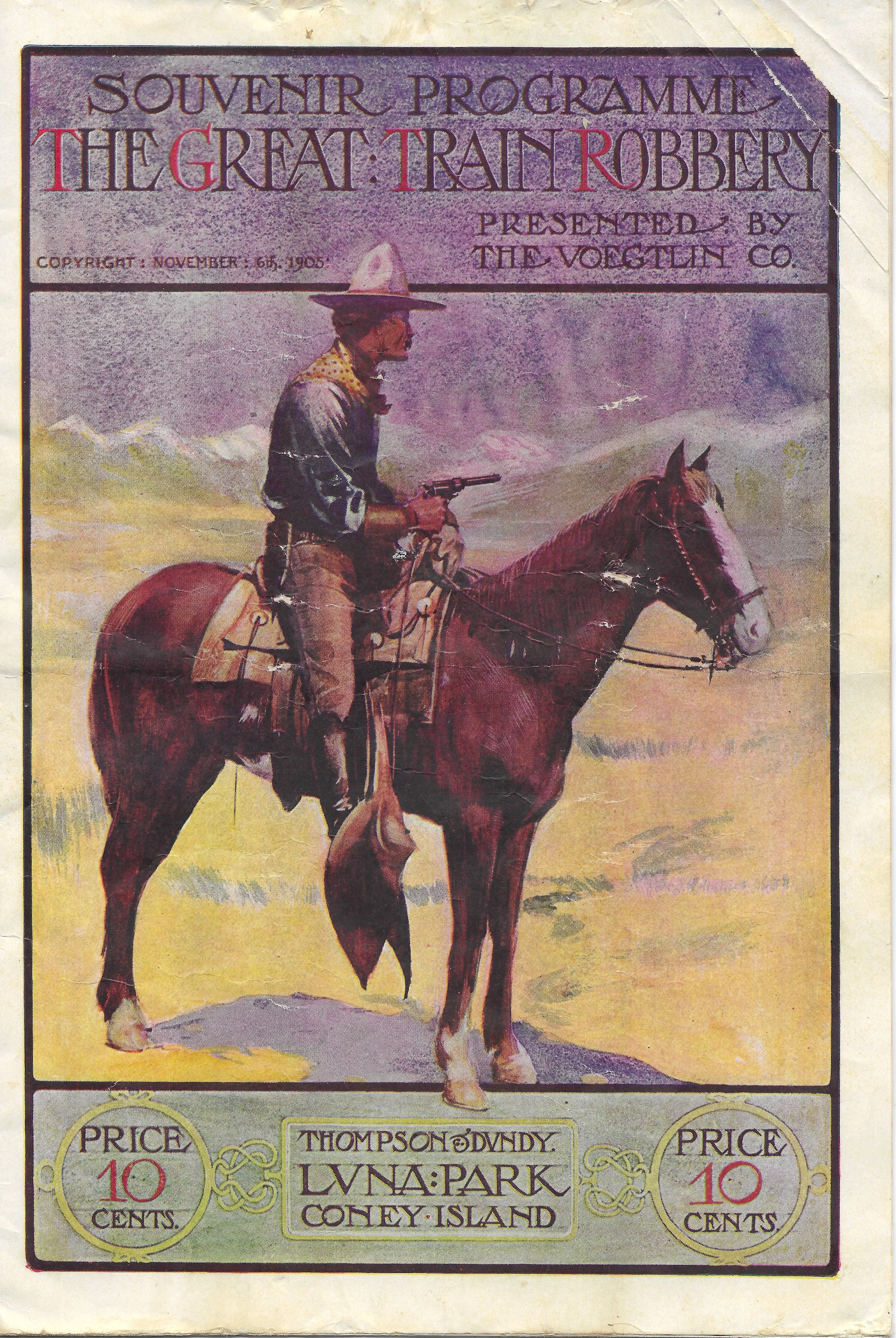
Left: Cover, The Great Train Robbery, Luna Park, Coney Island
One of the most ambitious of these shows was Luna Park’s The Great Train Robbery, installed in 1906. Produced by Arthur Voegtlin, it was a classic “good guys vs. bad guys” story, performed daily in a 3,000 seat venue. (Note: Voegtlin famously designed and painted the scenery for the NY Hippodrome’s first season, among other productions). Its stage (touted as “the world’s largest”) was huge — 740 x 250 feet — specially reinforced to hold the full-size locomotive and several passenger coaches (a whopping 81 ton load) central to the production. The scenery featured enormous mountainous backdrops and three different stage sets, along with a cast of 150 people and 28 specially trained horses, with music provided by a live band.
The live-action thriller had chase scenes, gun fights, and (of course) romance for the ladies, but in the end, good triumphed over evil. And typical of most productions in Coney Island’s early days, The Great Train Robbery was replaced in 1907 by another production, “Days of ’49” (referencing the gold rush of 1849), which utilized many of the same sets.
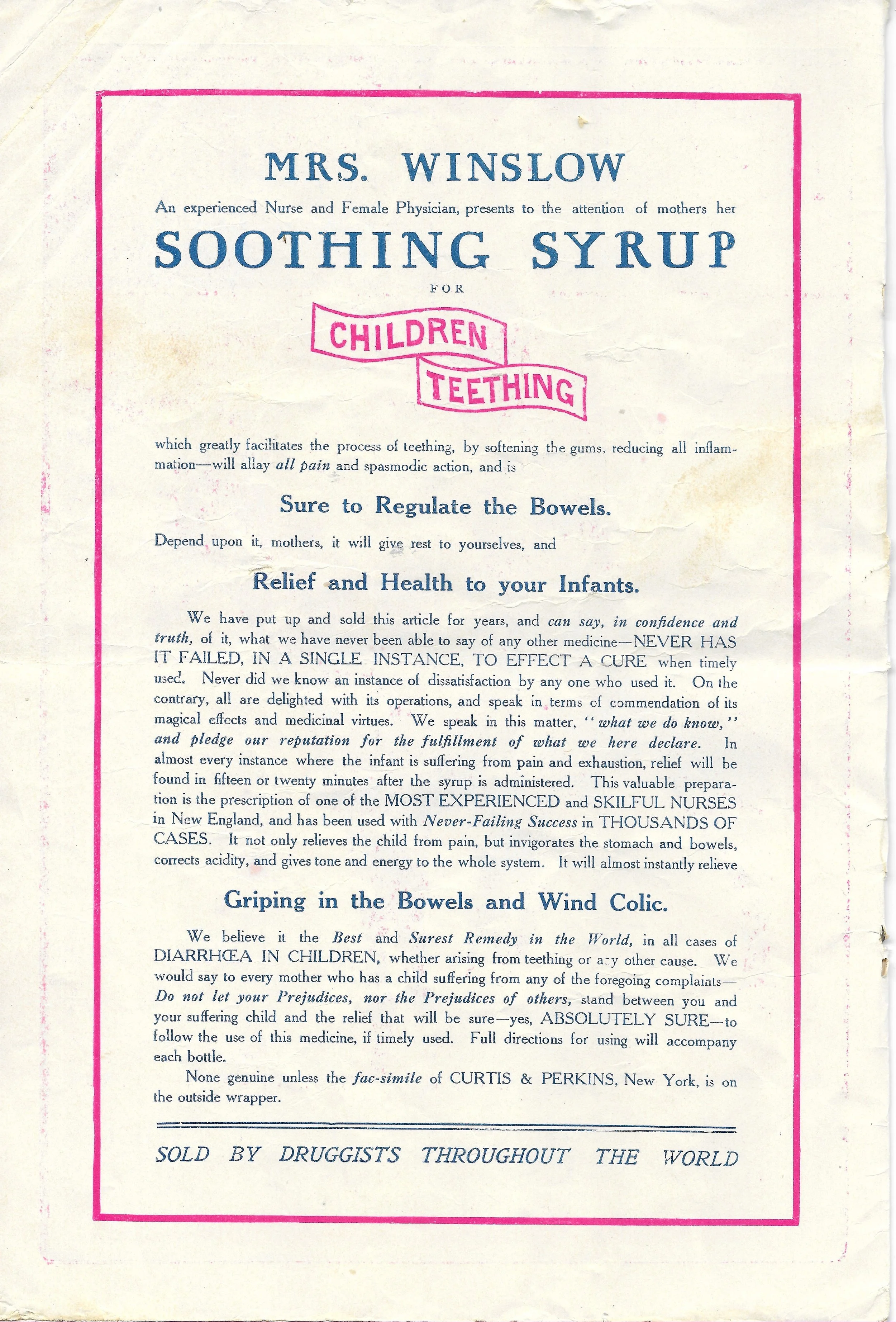
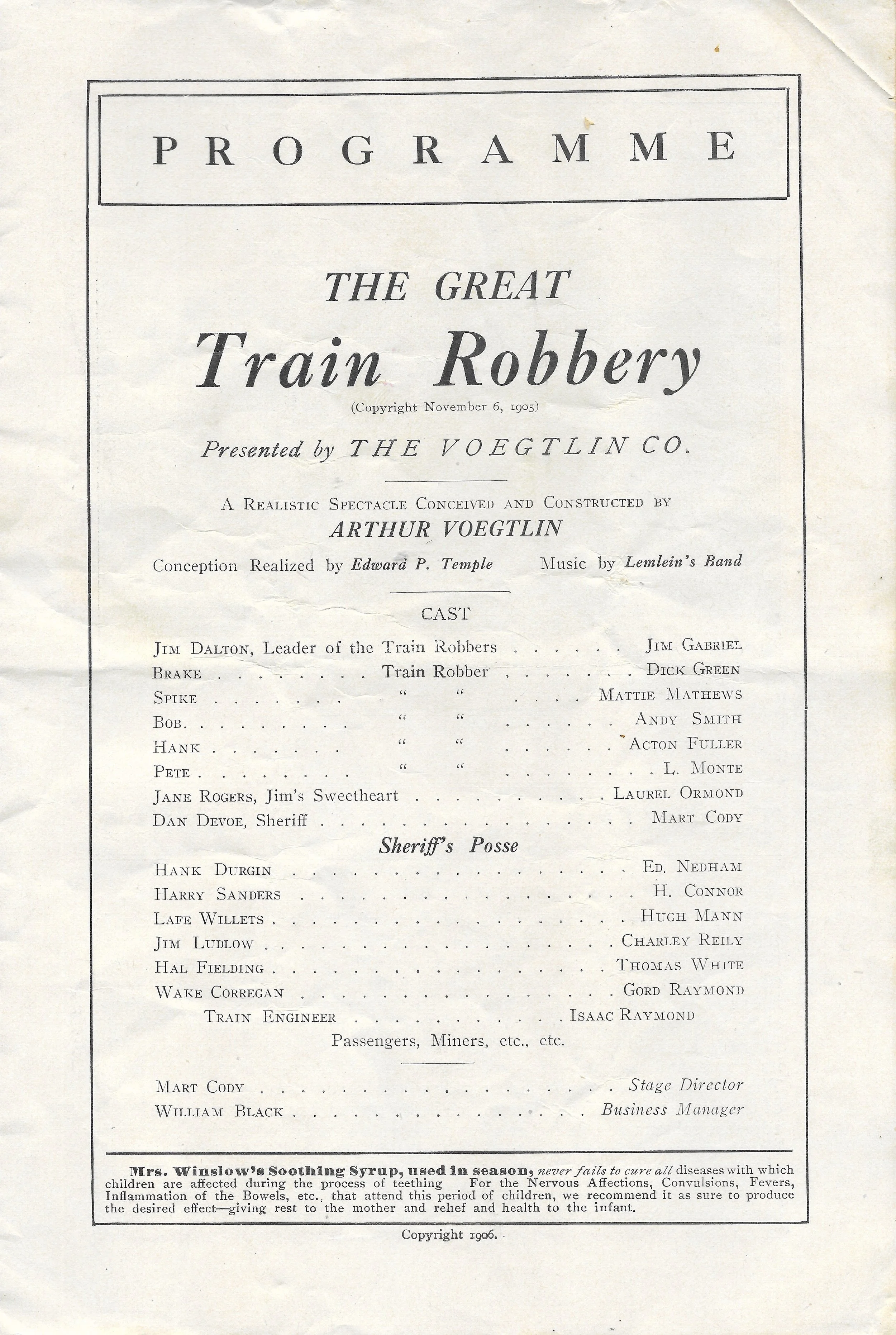
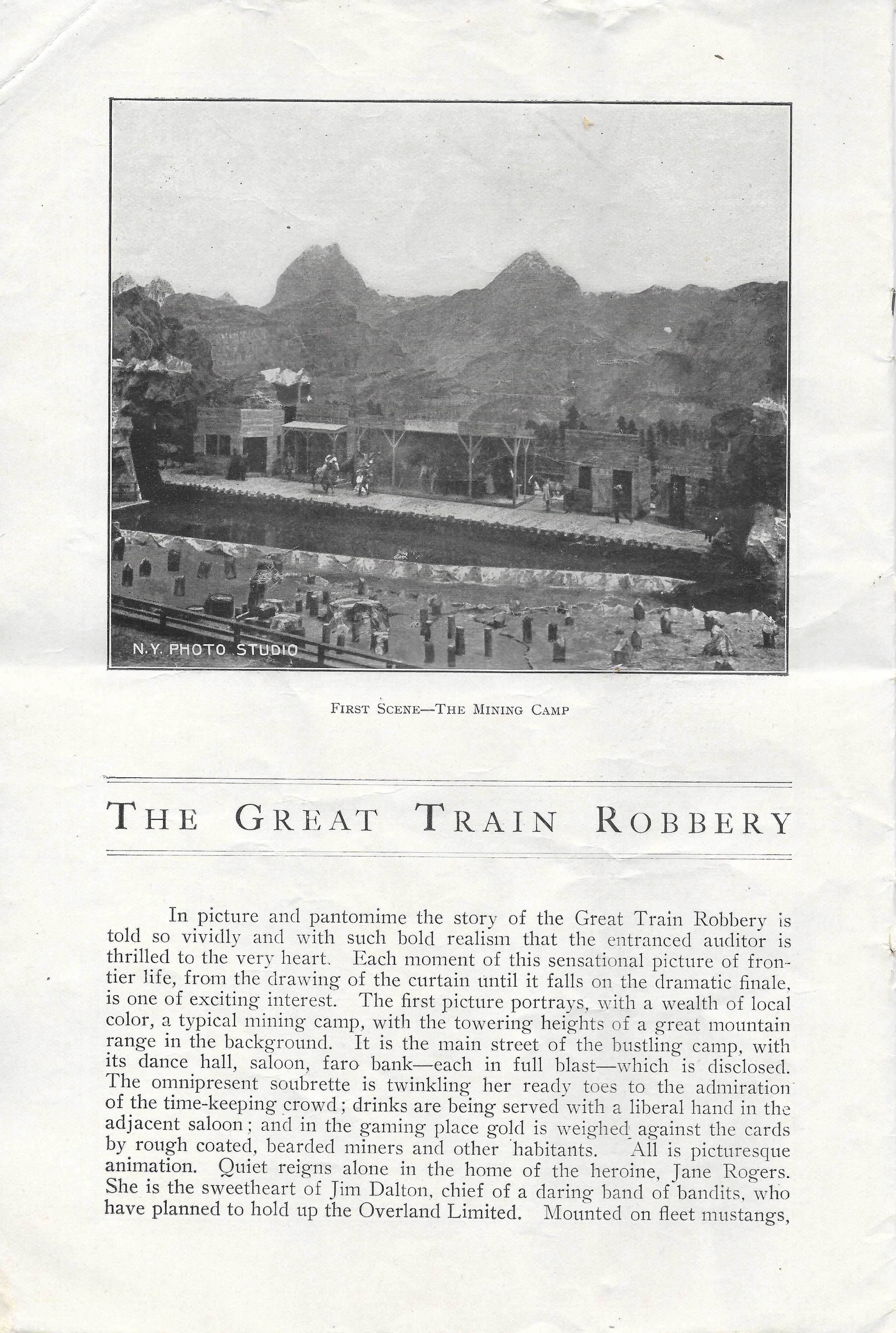
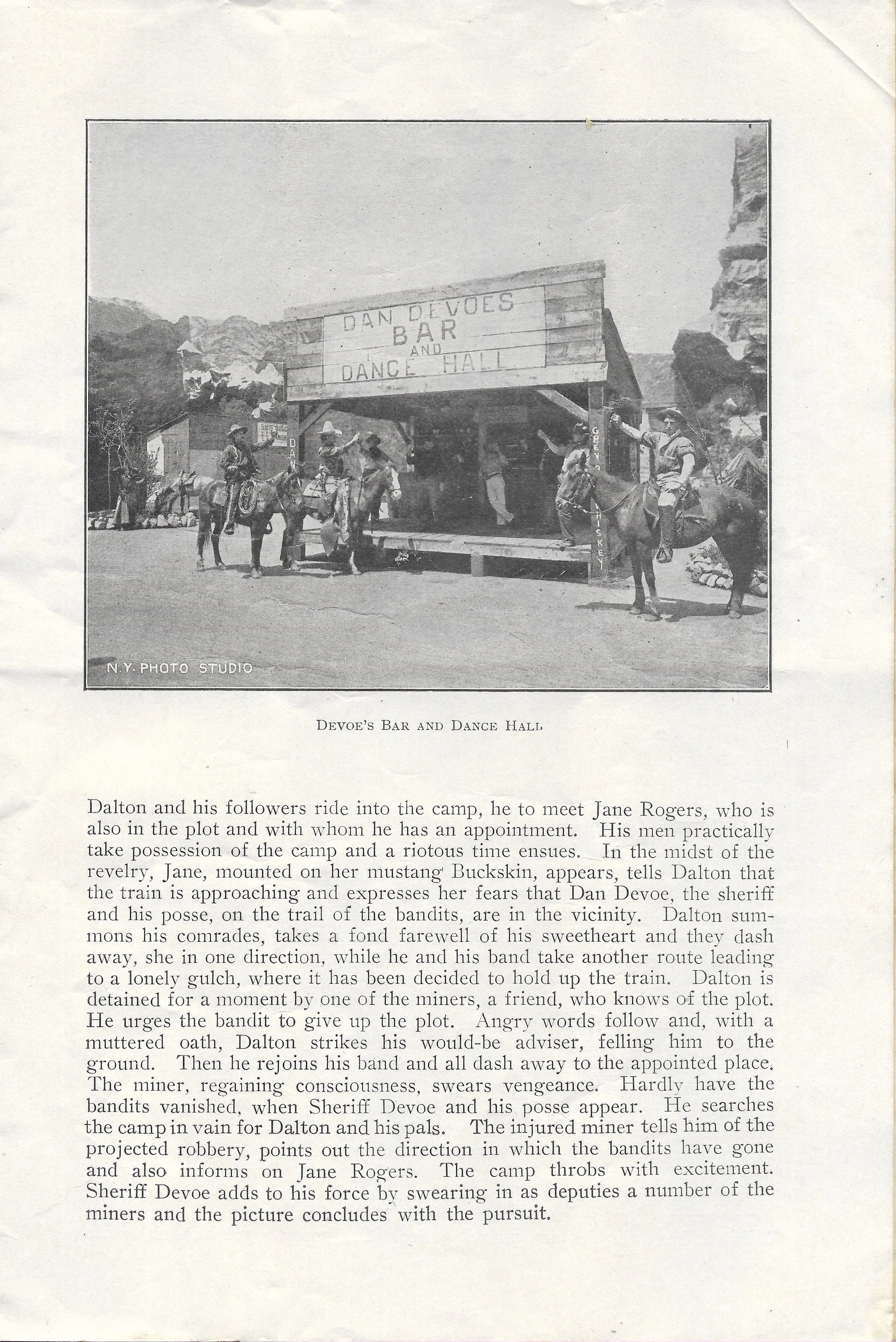
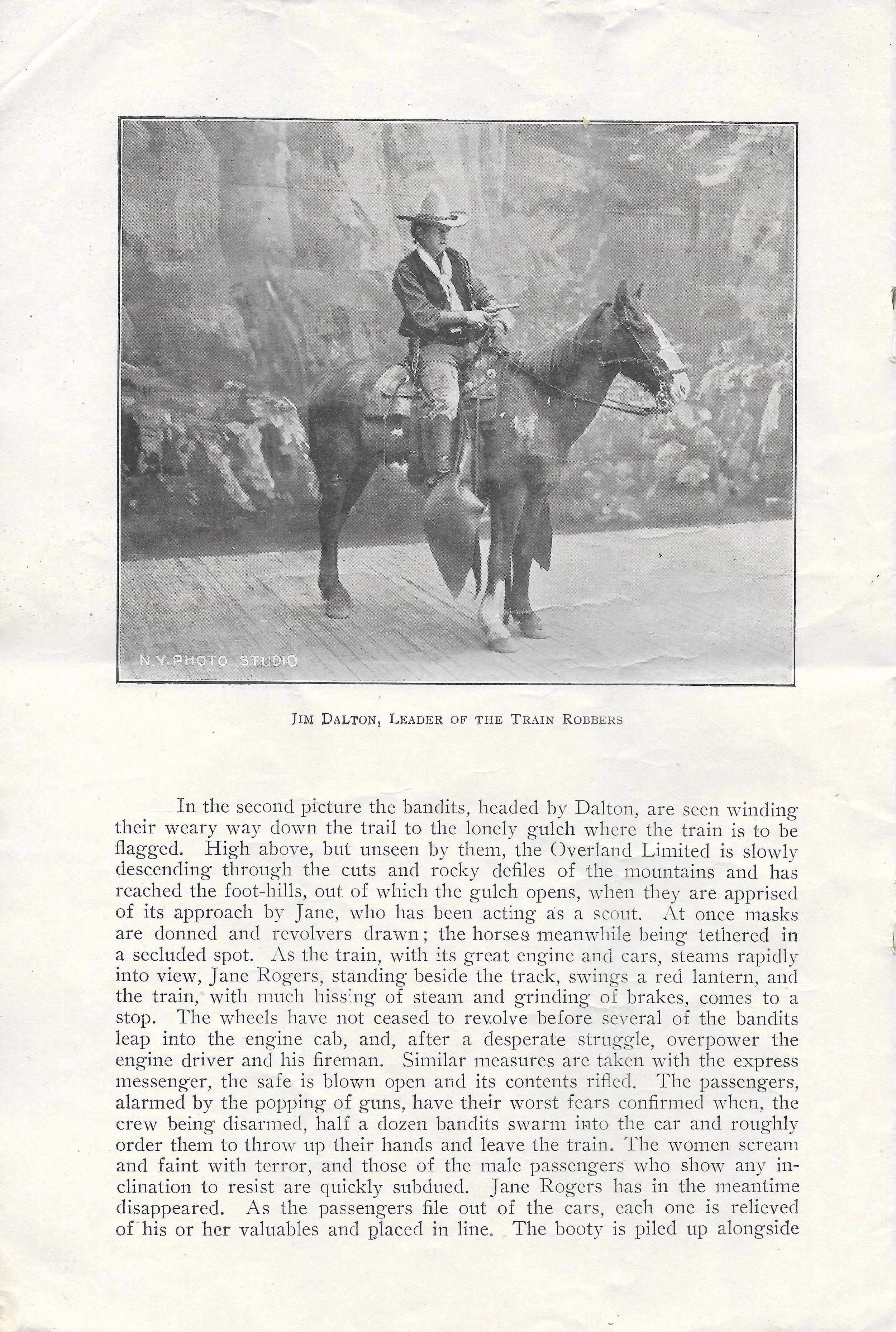
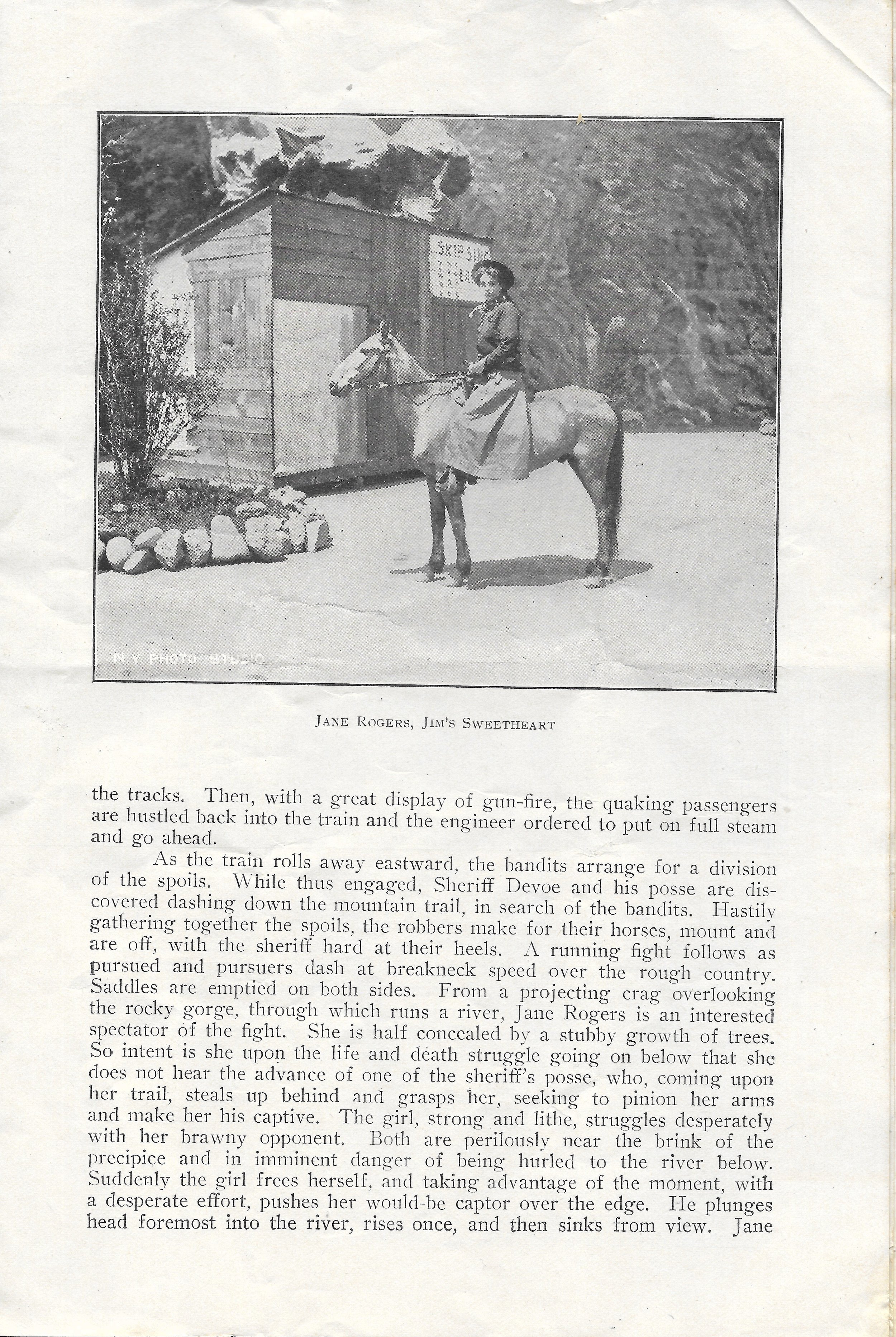
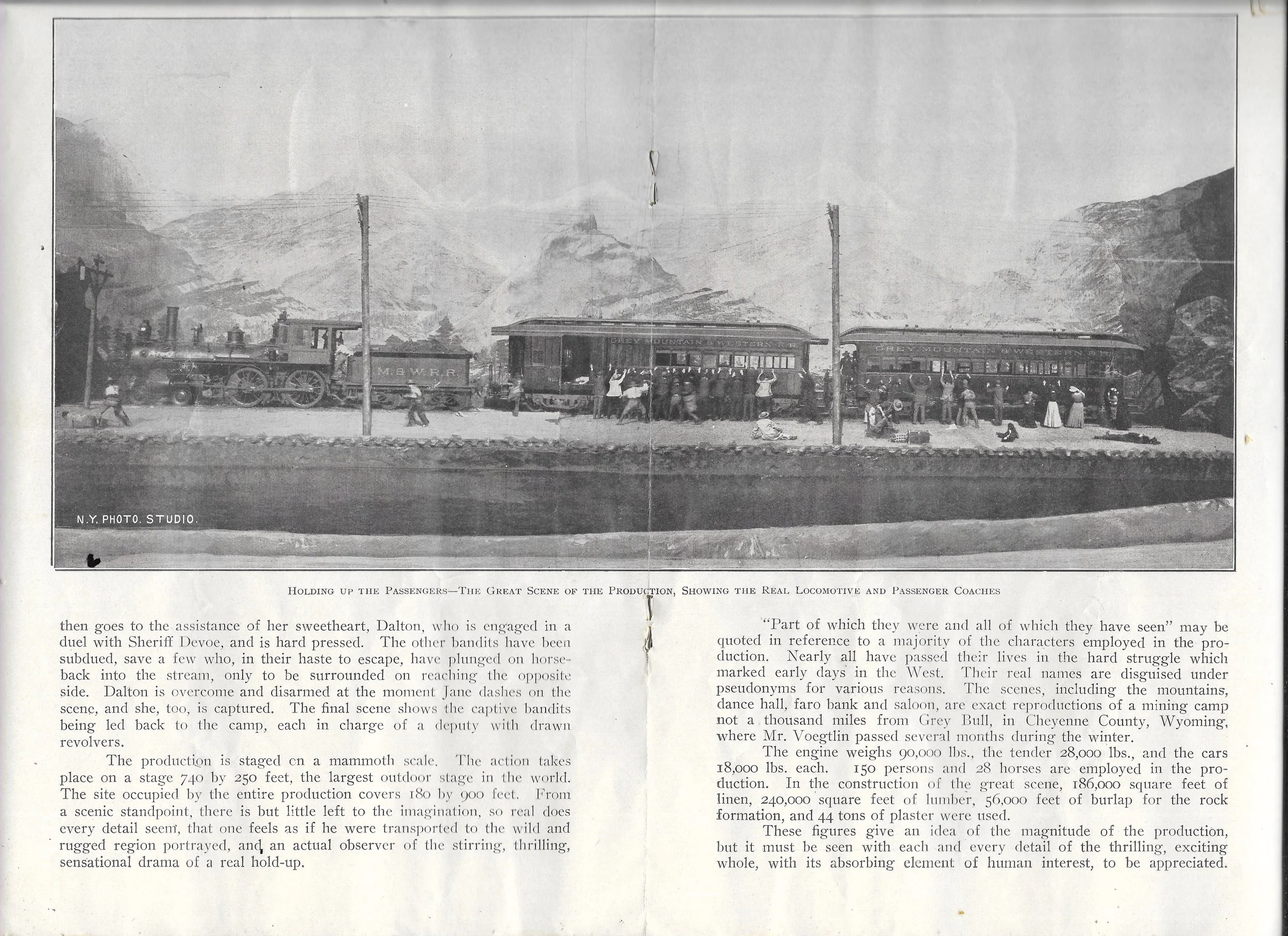
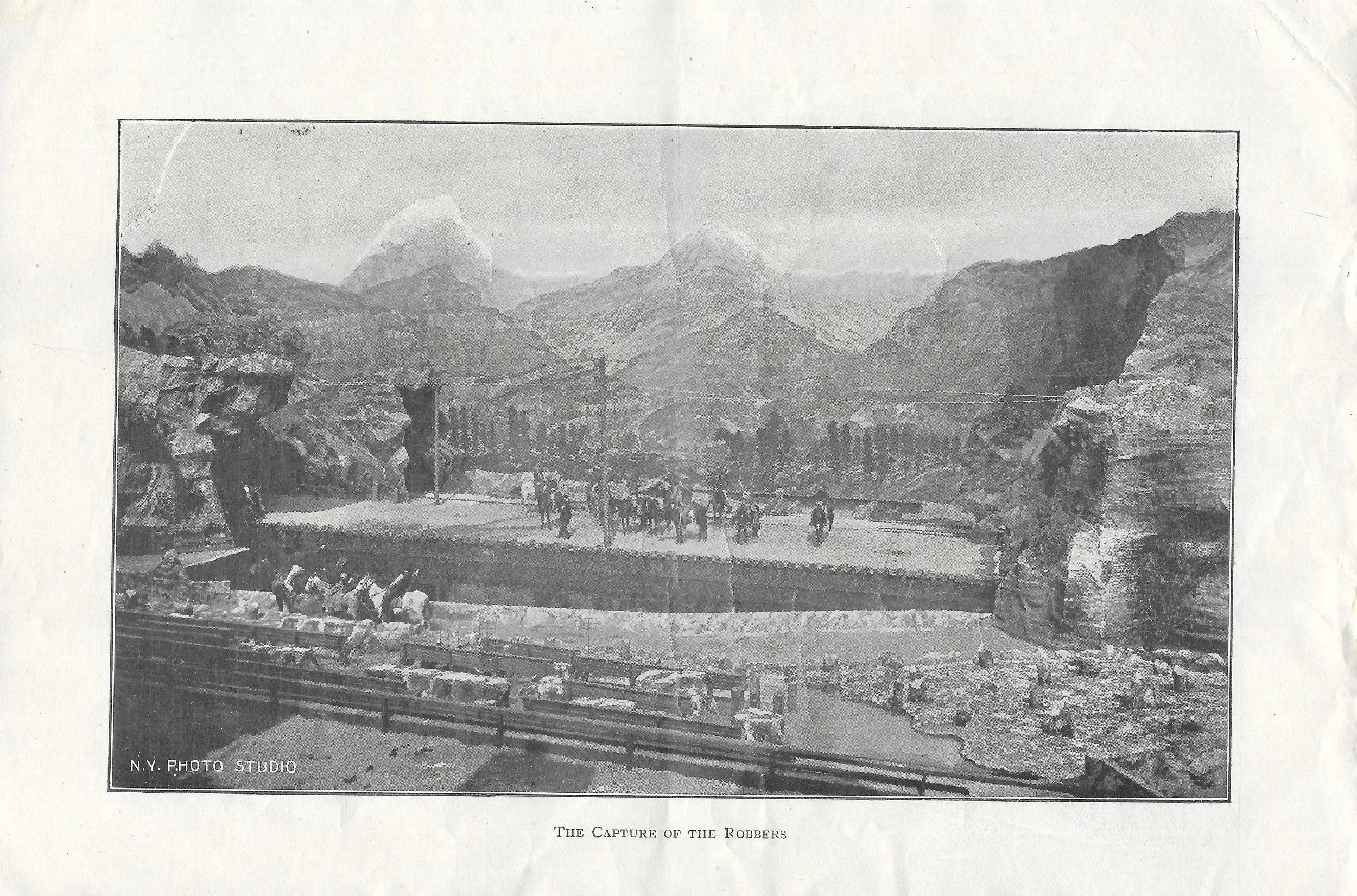
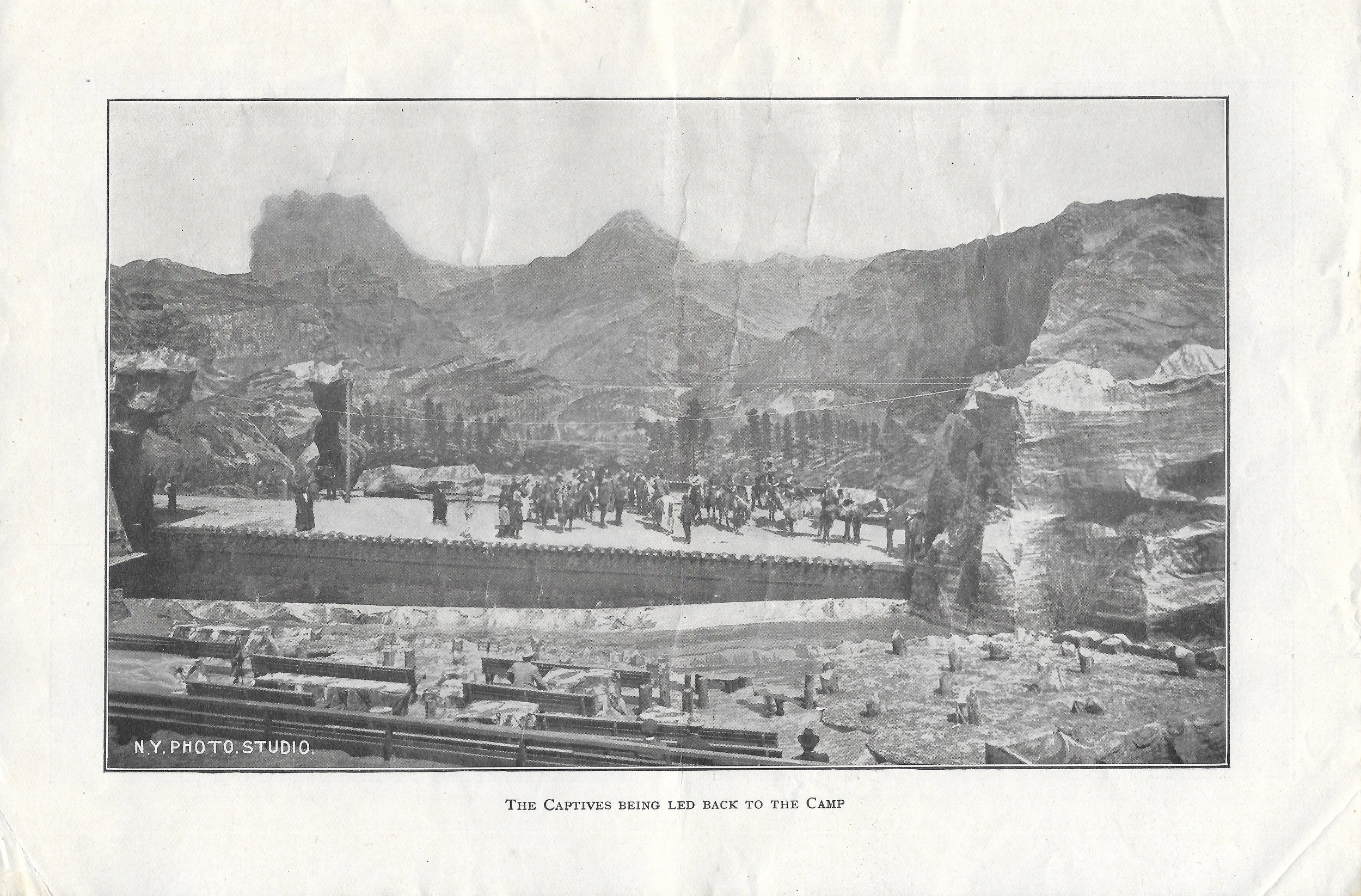
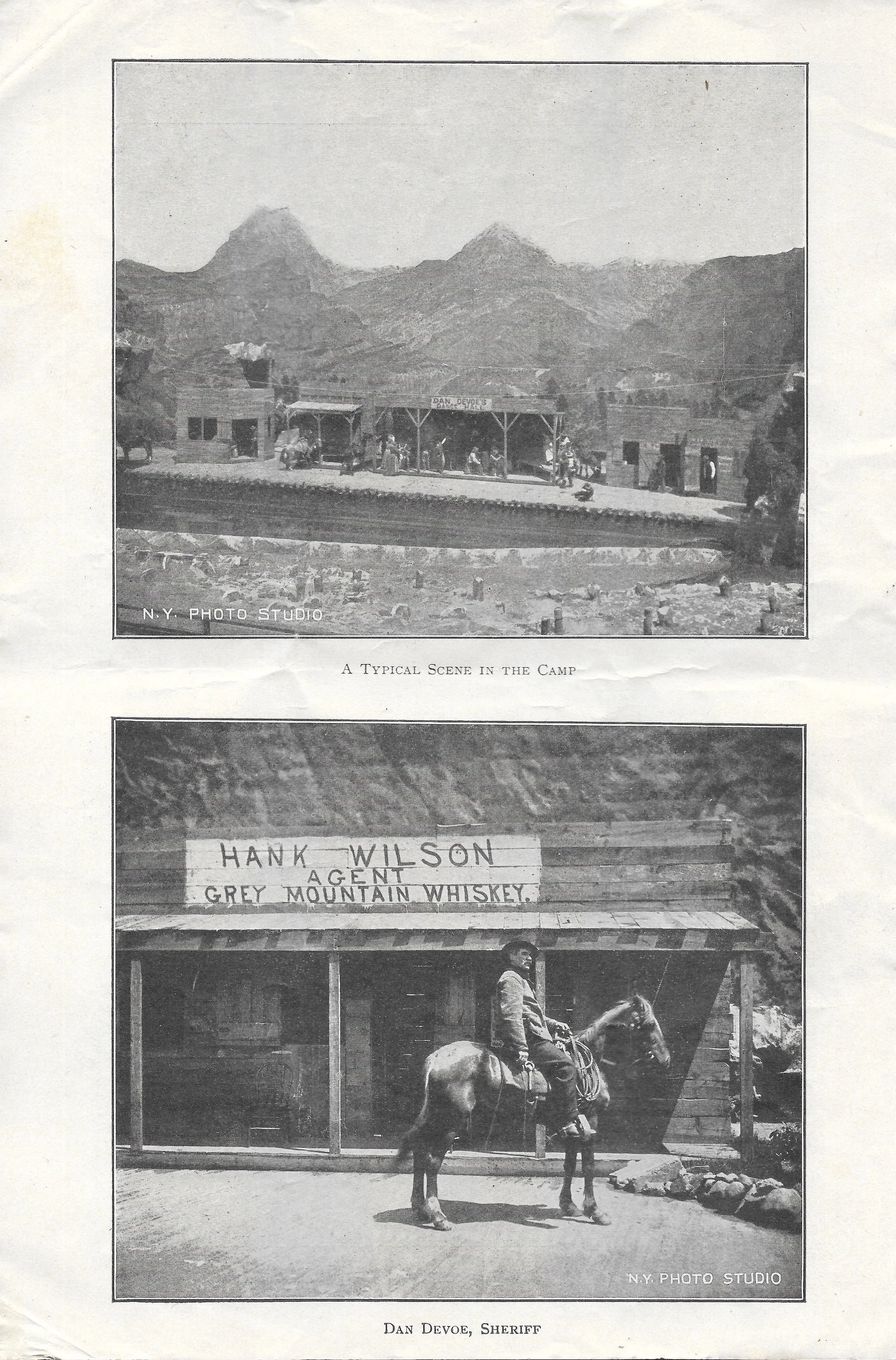
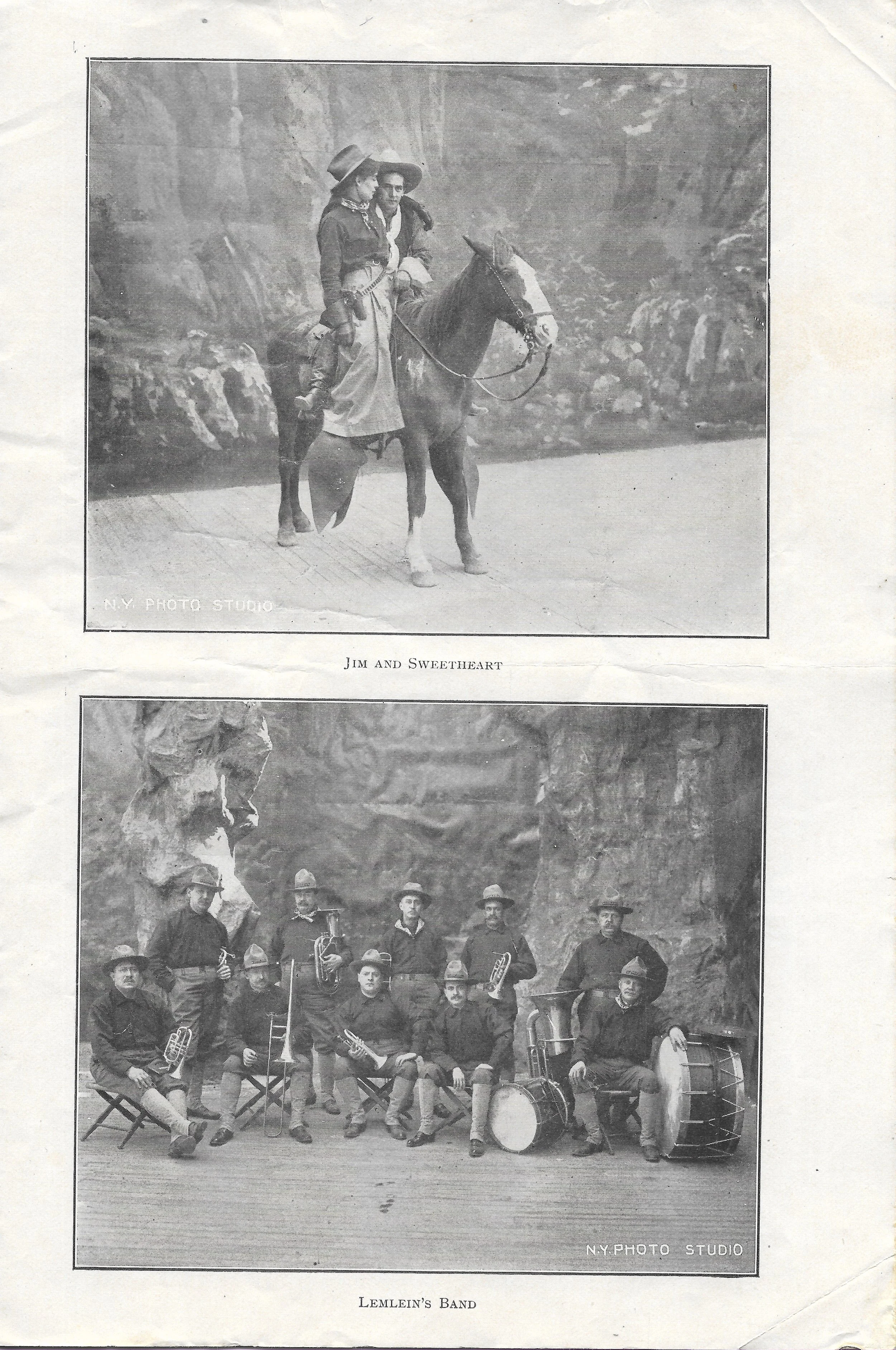

Copyrighted in 1905, this original program is considered rare and highly collectible. Like much of the ephemera in the CIM’s collection, the safest and most practical way to allow visitors to examine this type of material is by making scanned images available to view online.
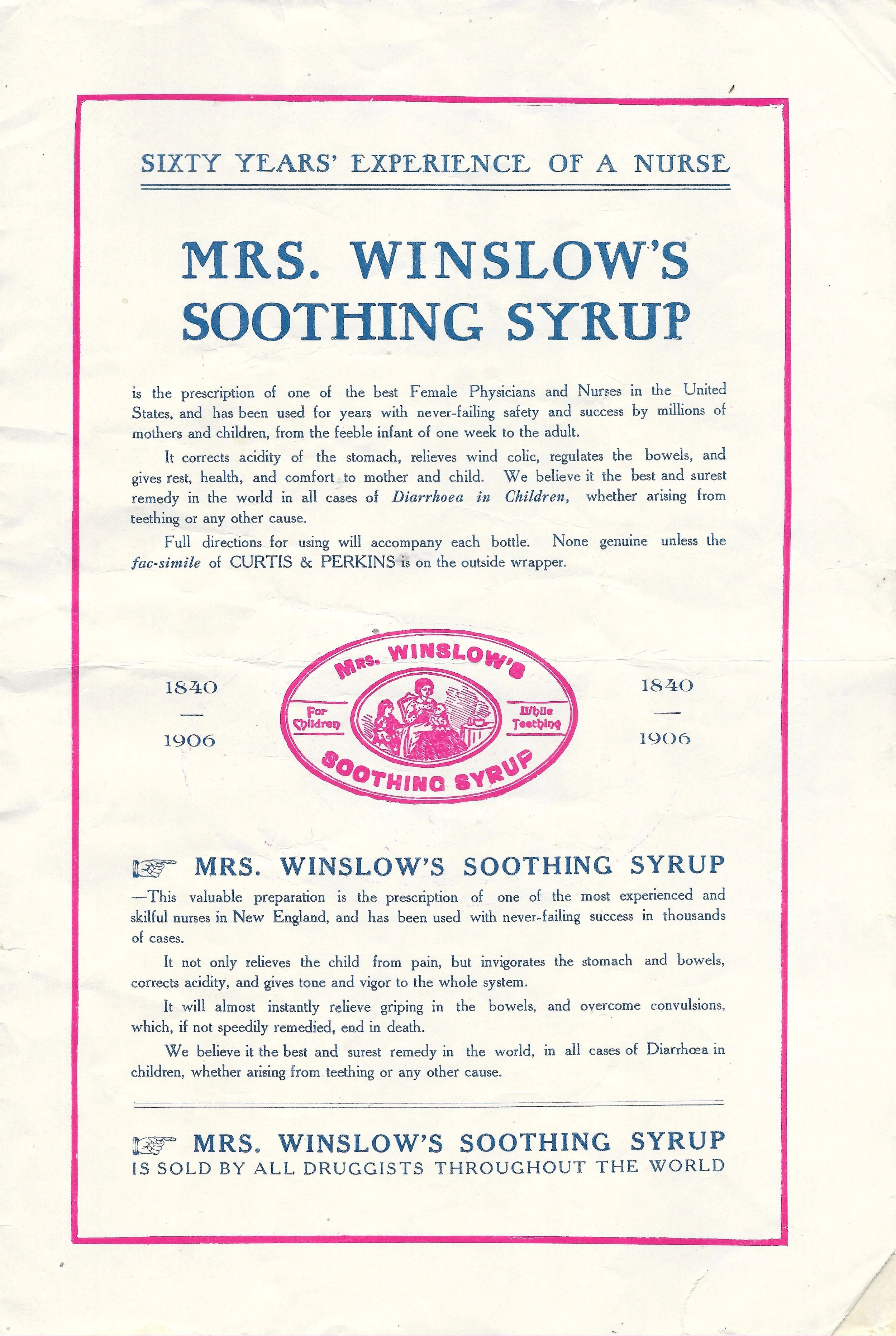
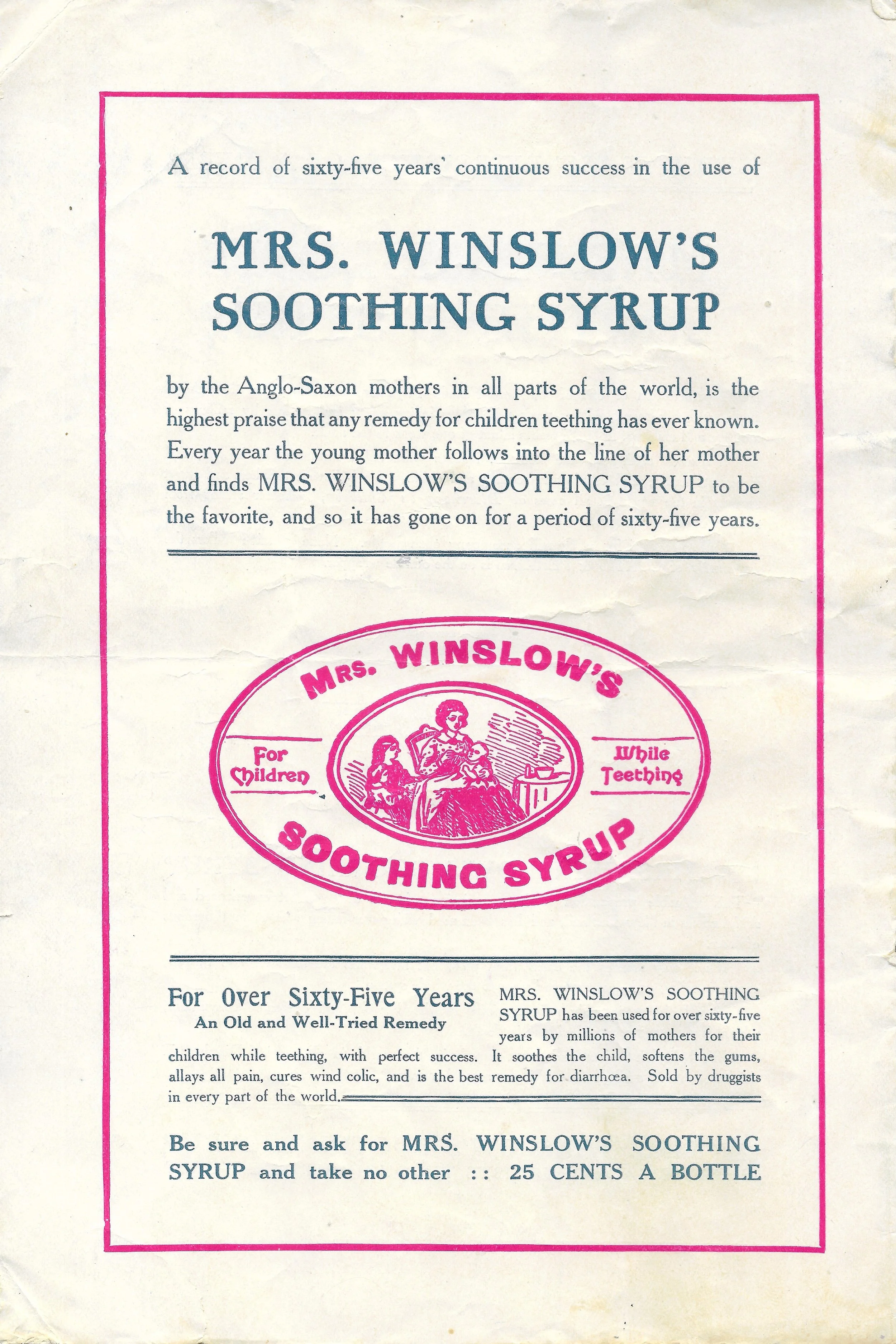
One more note — the program features a number of advertisements for Mrs. Winslow’s Soothing Syrup, a popular “patent medicine” whose active ingredient was morphine sulfate which, despite numerous warnings about the product’s effects and safety, continued to be available to the public until 1930.